
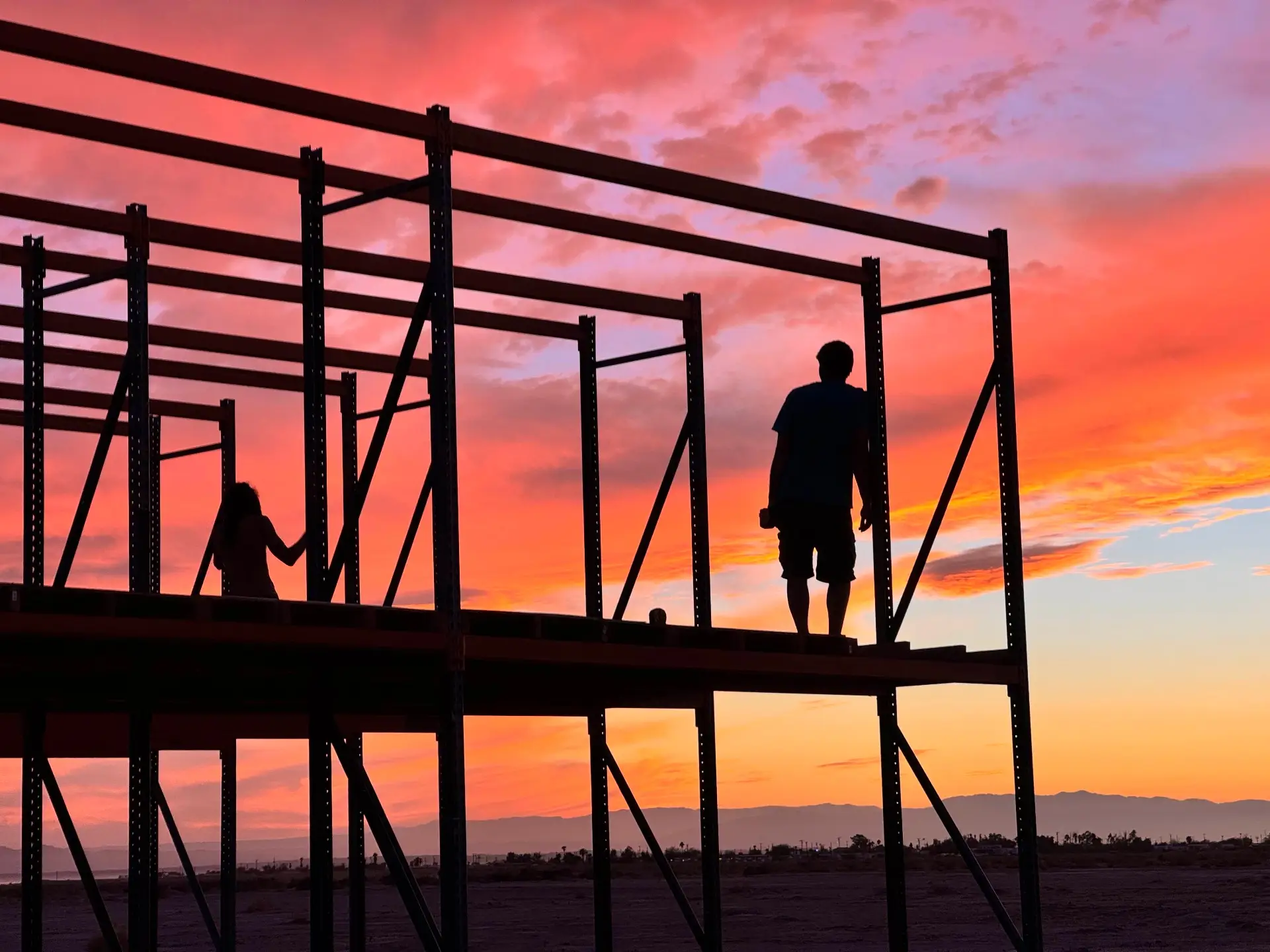
Mars College · Jan – Apr 2027
The Department of Makers is Mars College's Makerspace
A three-month desert residency inside Mars College for building, stress-testing, and open-sourcing off-grid, DIY, deployable infrastructure.
-
Dates
Jan 11 – Apr 4, 2027
-
Cohort
20 residents
-
Duration
3 months
-
Cost
$1,000 – 1,500
The Department of Makers (DOM) is a field laboratory for life after certainty.
The Salton Sea region is a difficult place to live. With no direct hookup to water, power, or waste-disposal services, the Mars College campus is an experiment in off-grid living. As the workshop and R&D arm of Mars, the DOM treats this environment as a unique opportunity and design challenge: to see how affordably we can meet as many of our living needs as possible, reduce our waste streams, and have fun doing it.
The stakes on Mars are ultimately low, but we think the importance of developing these systems is high. Whether for environmental or human-made disasters, occupy movements, or just reducing our collective costs and material dependencies, there's something to be learned by figuring out how to live where there are no systems to support us.
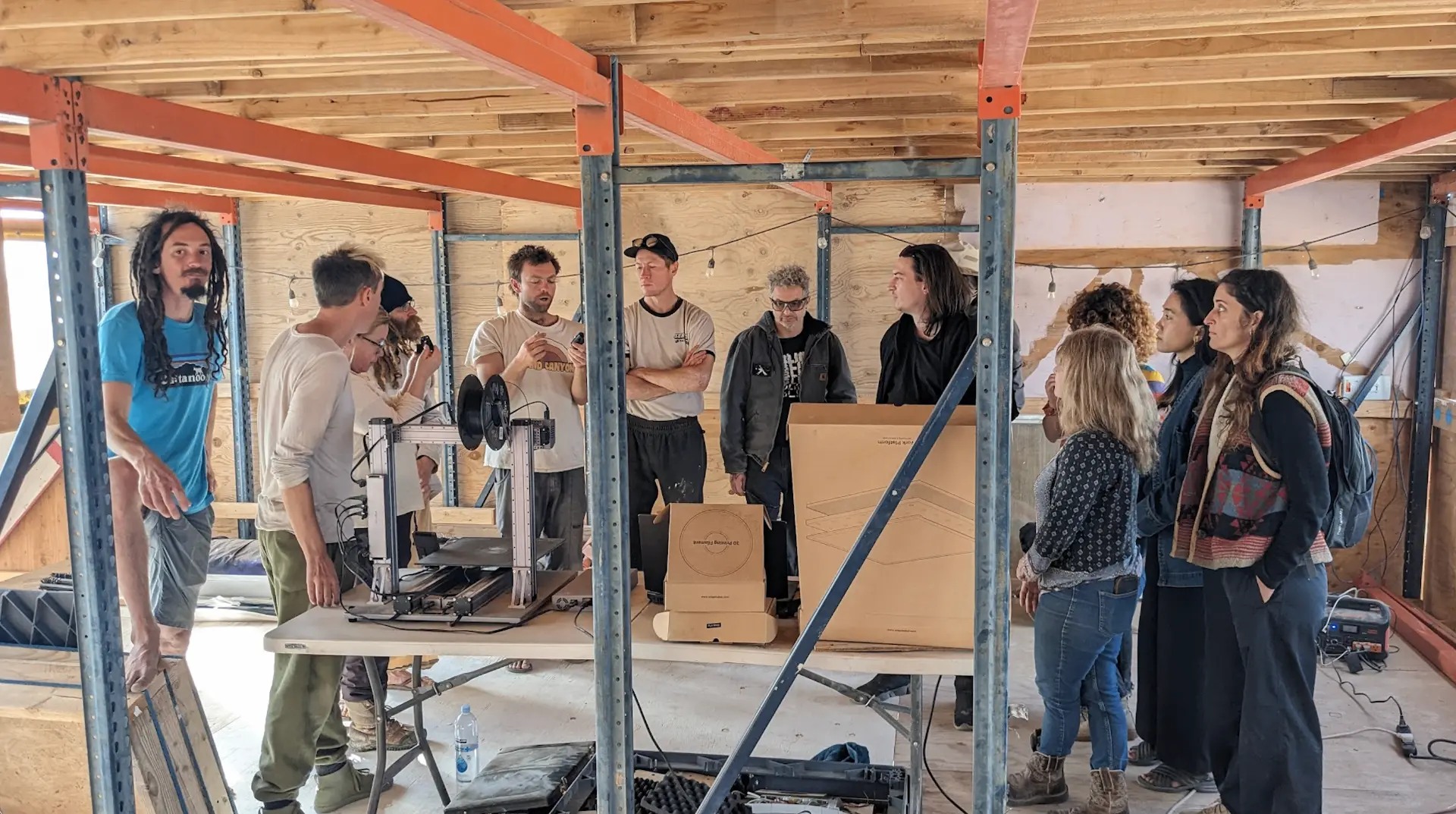
A collaborative research and fabrication residency.
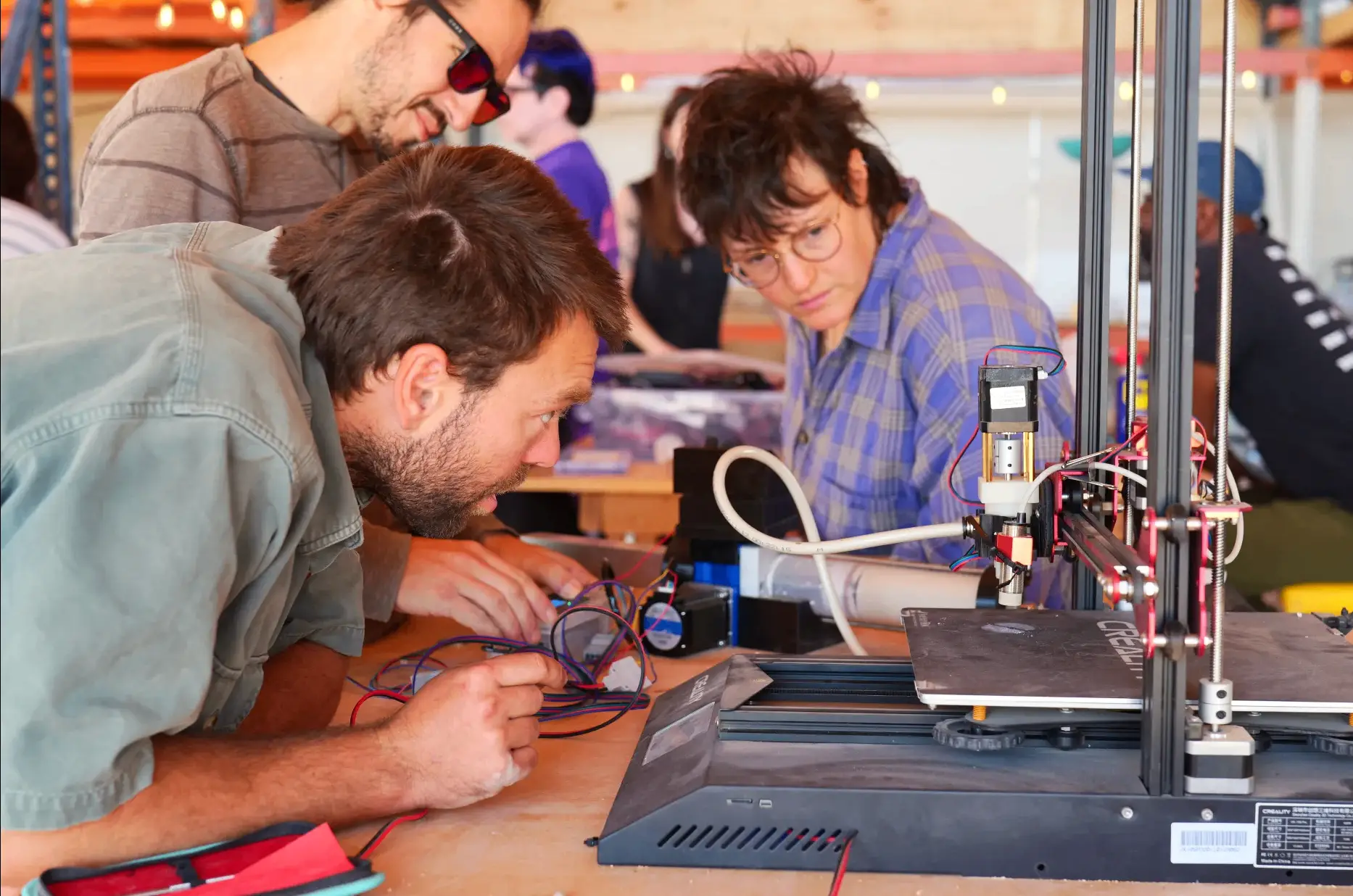
Every resident arrives with an ambitious project of their own — a machine to prototype, a material to investigate, a sculpture to fabricate, a system to test, or an idea to bring into the physical world. Most days are spent immersed in that work, supported by a workshop full of tools and a community of people eager to help solve difficult problems.
But the DOM has a second project: the DOM itself.
The workshop, the kitchen, the shared spaces, and the camp's infrastructure are all collectively built, maintained, and improved by the people who use them. Residents help set up the spaces we inhabit, keep the shop running safely, share responsibility for communal systems, and leave the camp better than we found it.
Come with a project. Come prepared.
The DOM is a project-based residency. Every participant is selected on a proposed project or area of investigation they intend to pursue during the program. We welcome projects at many stages — from well-defined prototypes to focused research questions — but the strongest applications arrive with a clear plan and realistic goals. The more groundwork done before arriving, the more time you'll have to build, test, iterate, and collaborate once you're here.
Mars is an excellent place to stress-test ideas under real-world conditions. It's less well suited to discovering halfway through a build that you're missing a specialized fitting from the hardware store. Projects that are thoughtfully prepared, largely self-contained, or designed to work within the constraints of a remote environment are far more likely to succeed.
Finally, the DOM follows a Leave No Trace philosophy. The camp is temporary, and we strive to leave the landscape exactly as we found it. Permanent construction, lasting alterations to the site, or work that can't be cleanly removed at the end of the residency will generally not be accepted.
Ideas that get us excited.
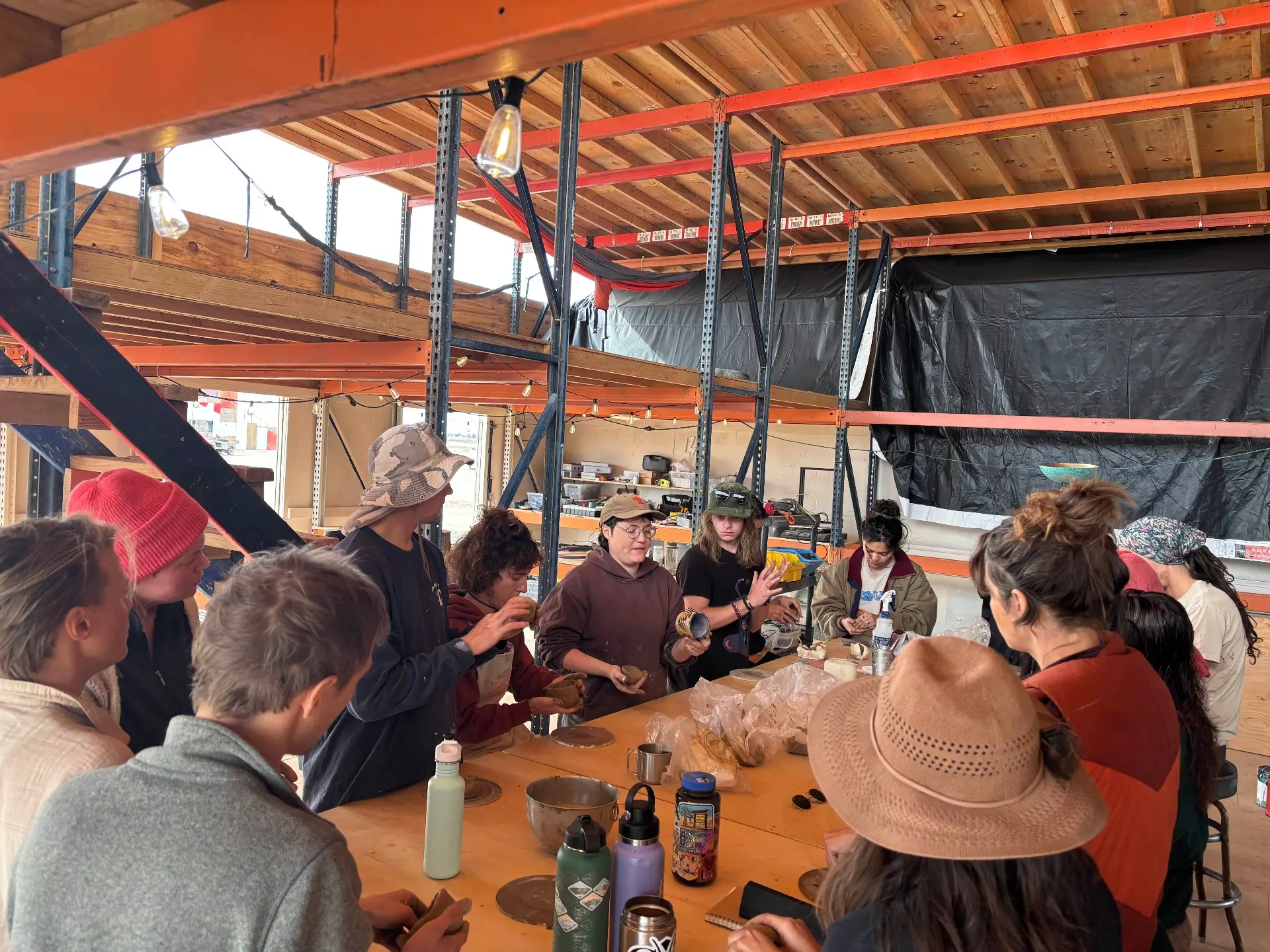
Some are practical. Some are speculative. Some are works of engineering, some of art, and many live somewhere in between.
- Building & maintaining a solar microgrid
- Rainwater collection
- Rainwater & solar-powered showers
- IBC waste-water biofiltration
- Large-scale earthen 3D printing
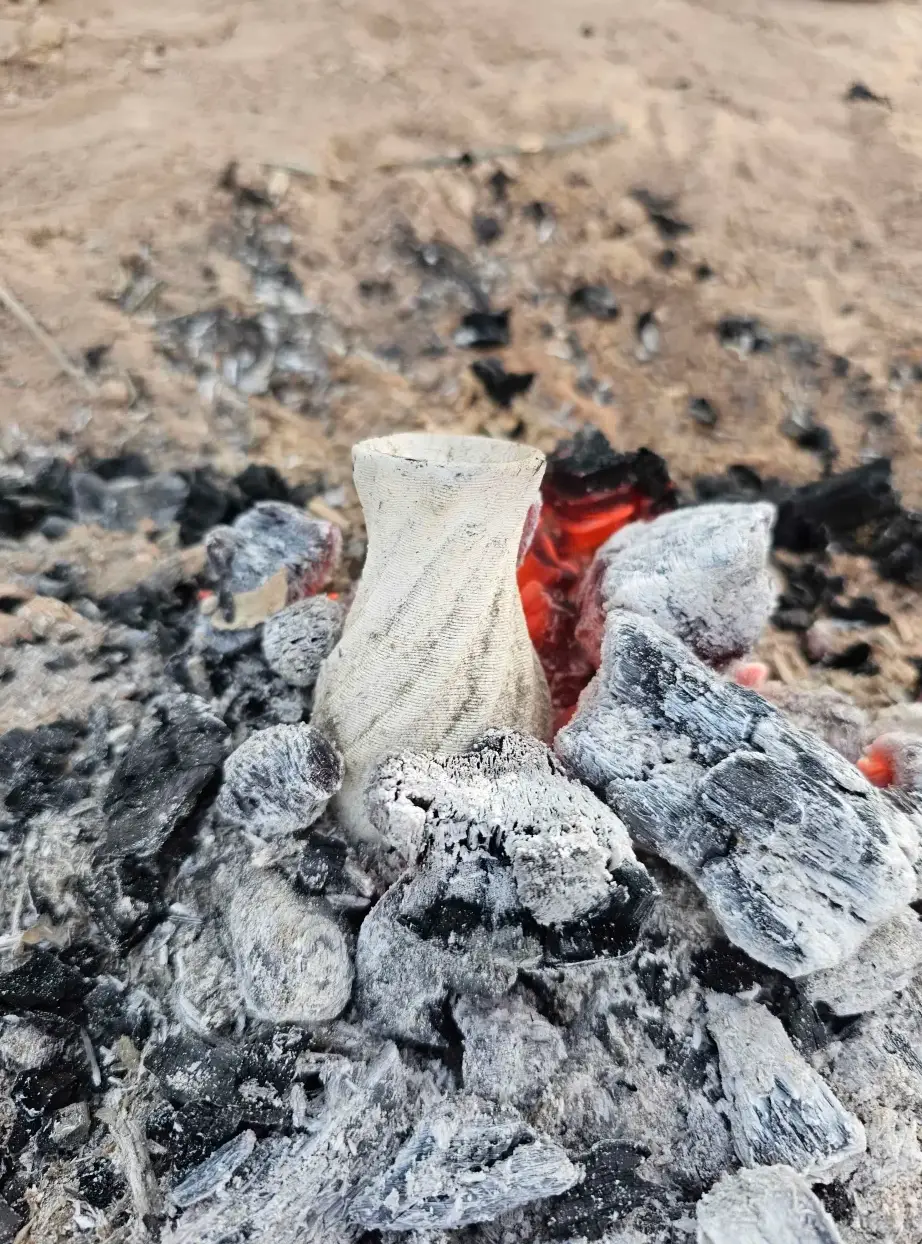
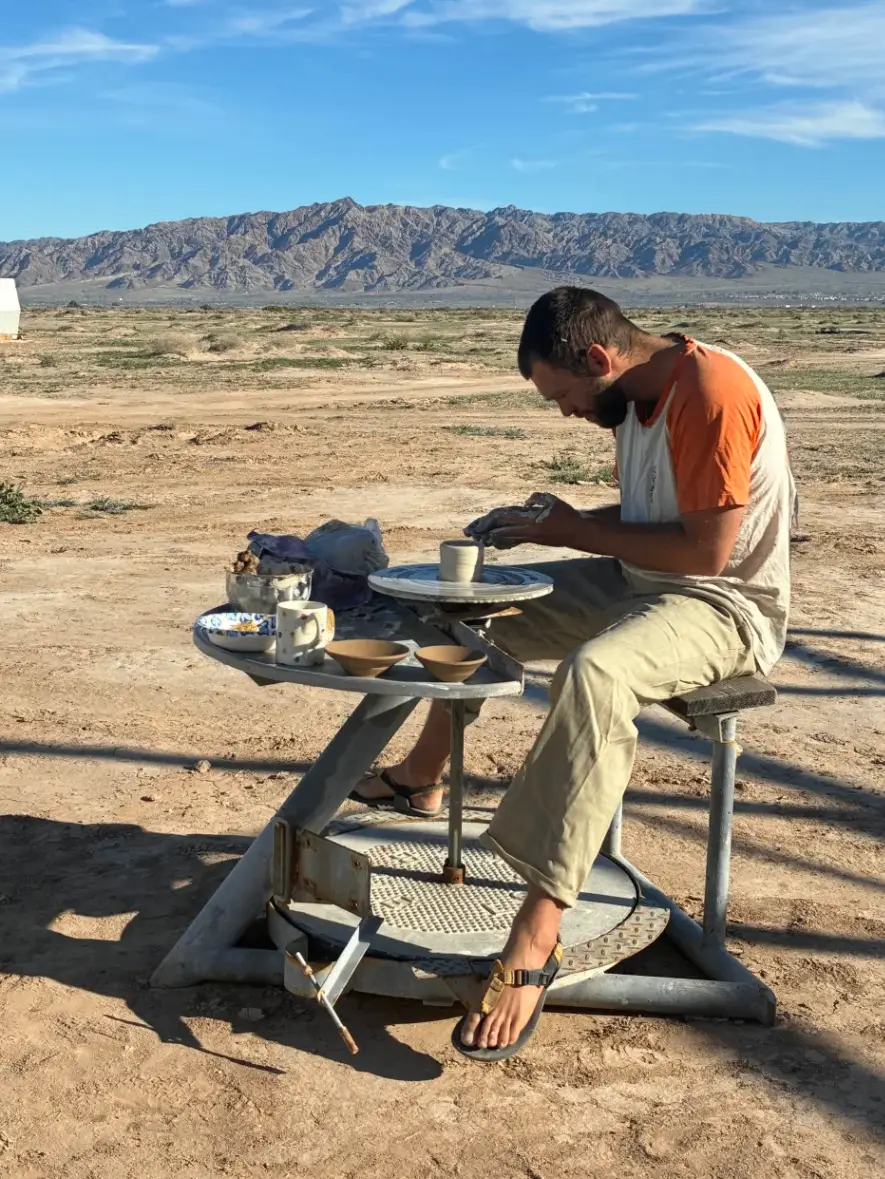
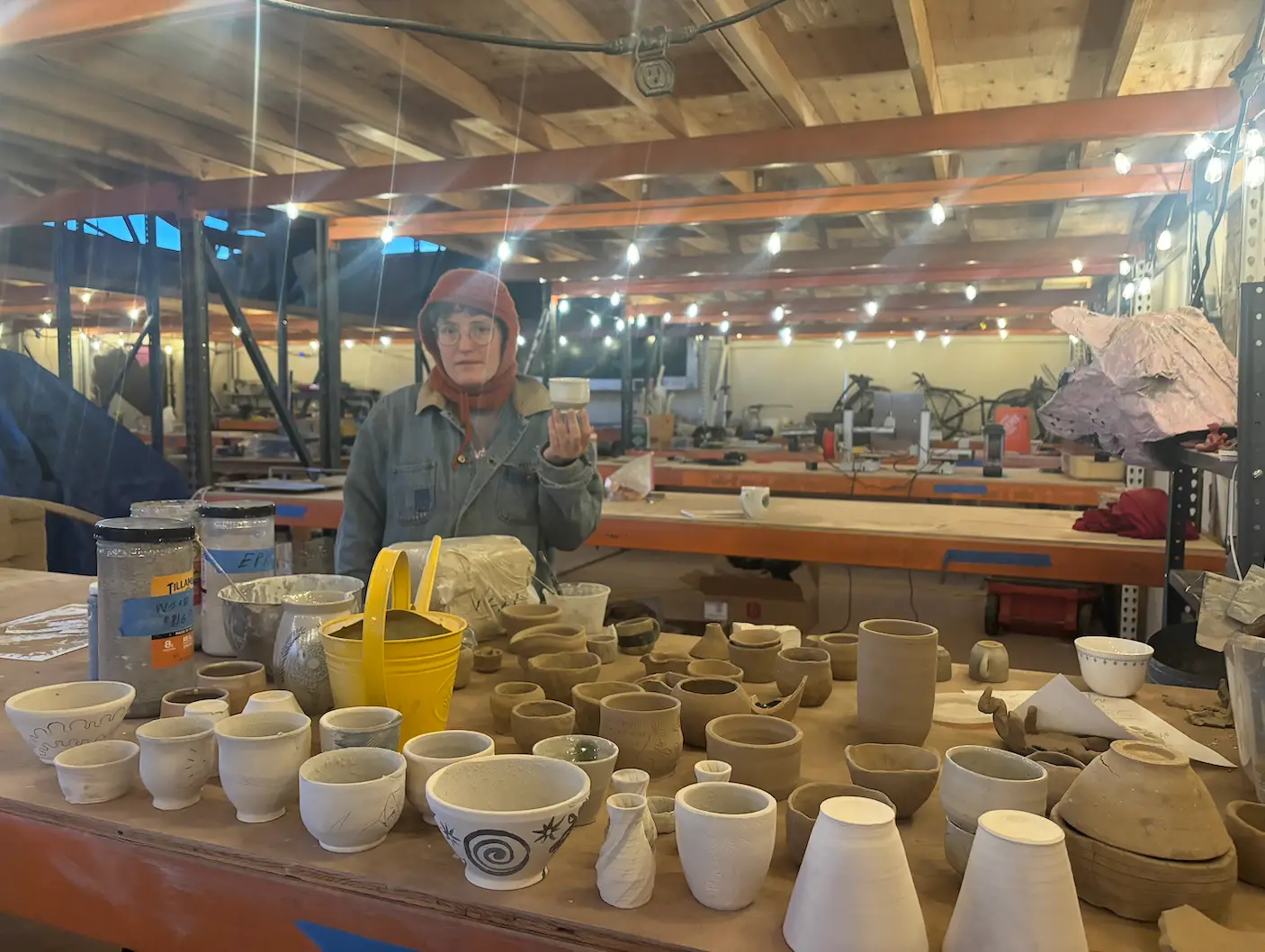
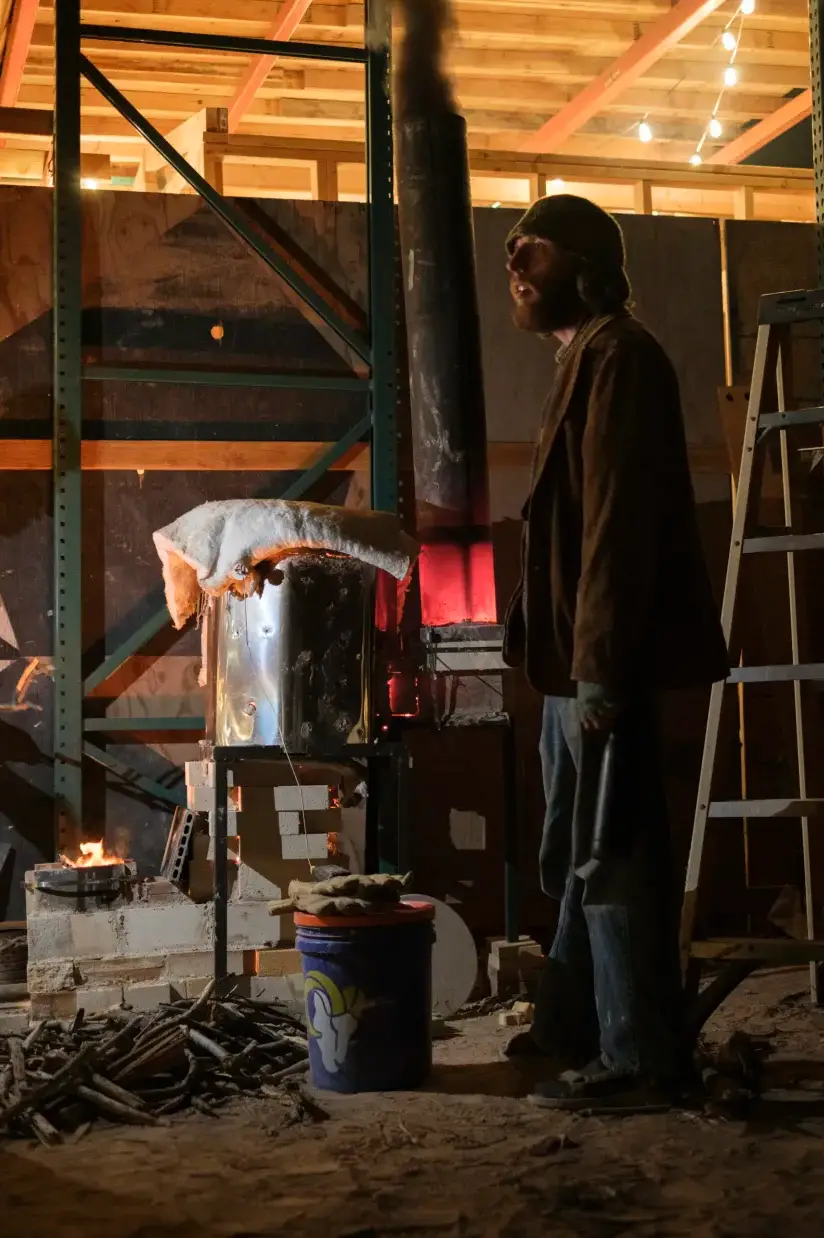
- Ceramics / rocket kilns
- Waste biomass gasification
- Wind turbines
- Concentrating solar power
- Hydroponic food production
- Mars rovers
- Robotics
- Decentralized internet & comms
- Biome automation
- Solar-powered kitchens
- Metal casting with aluminum cans
- Geopolymers
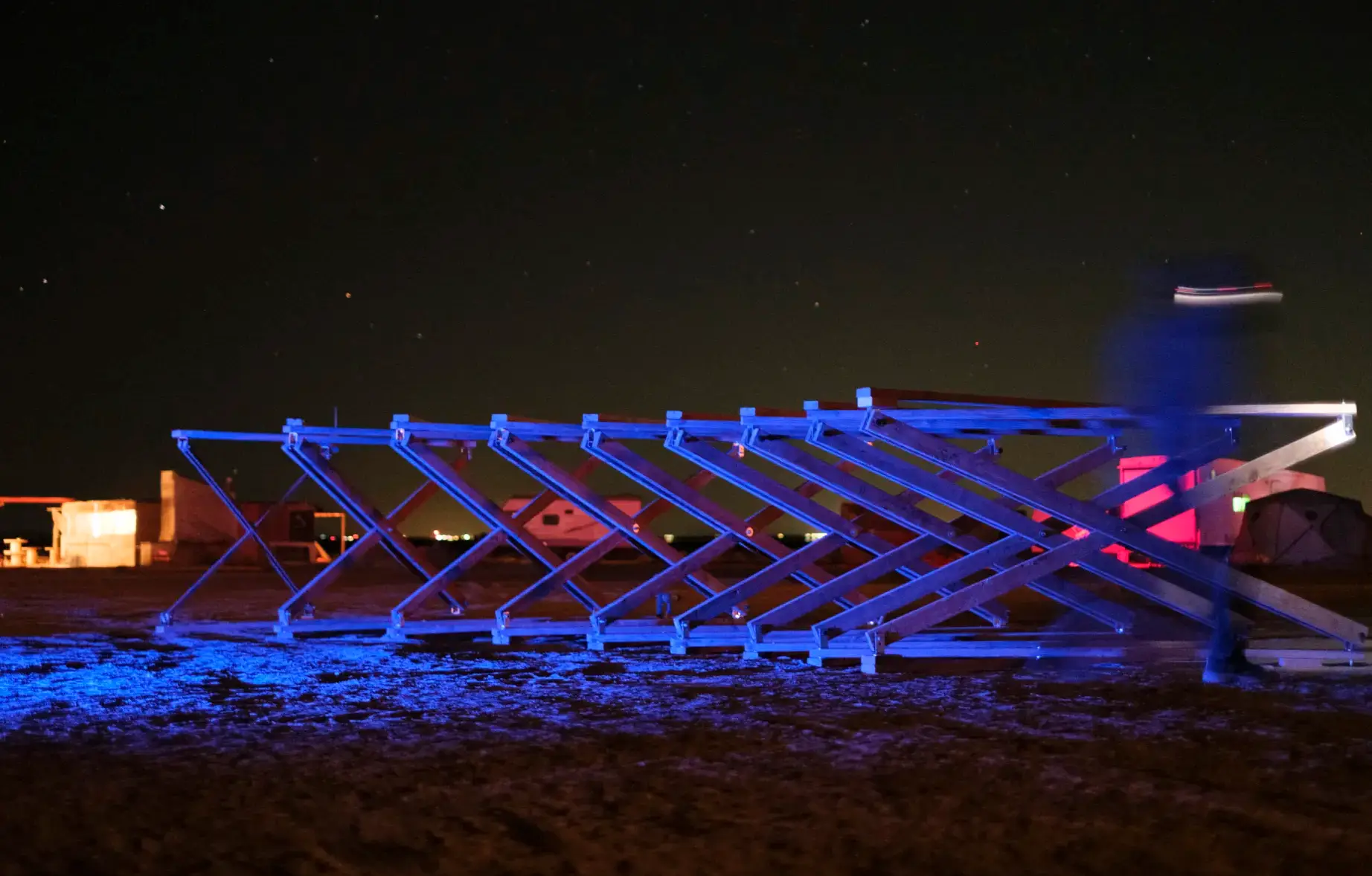
- Deployable structures
- Your project…
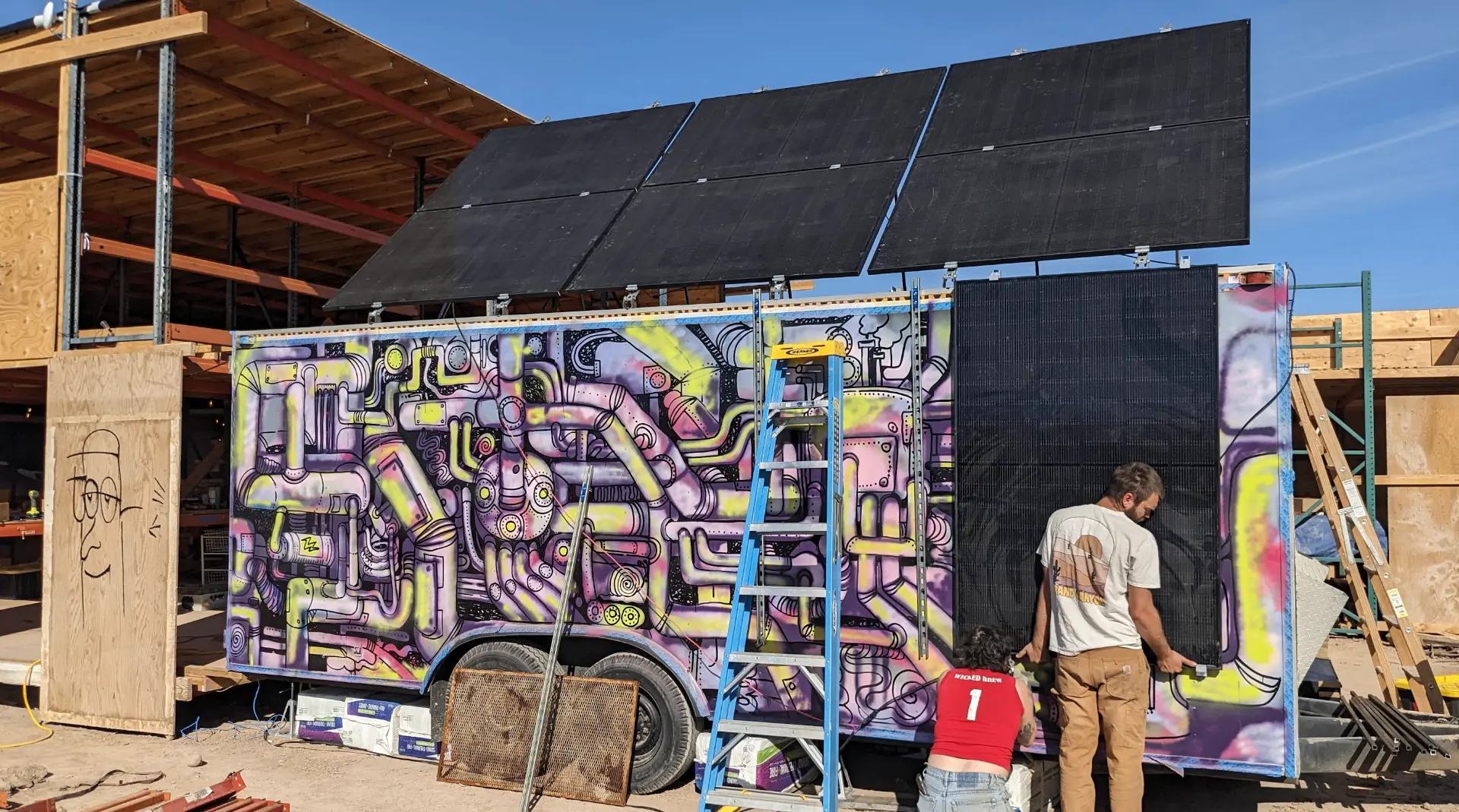
The Workshop.
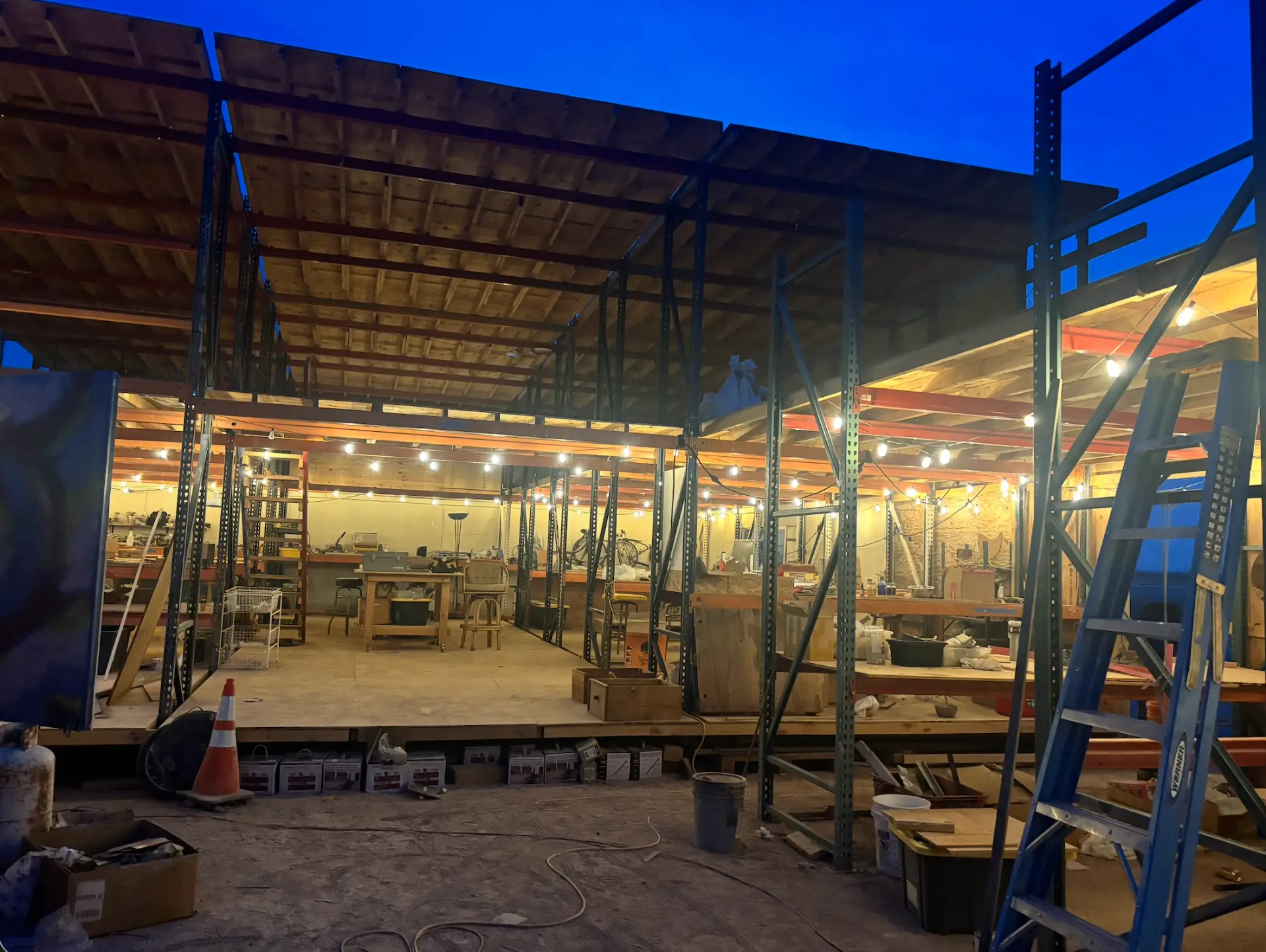
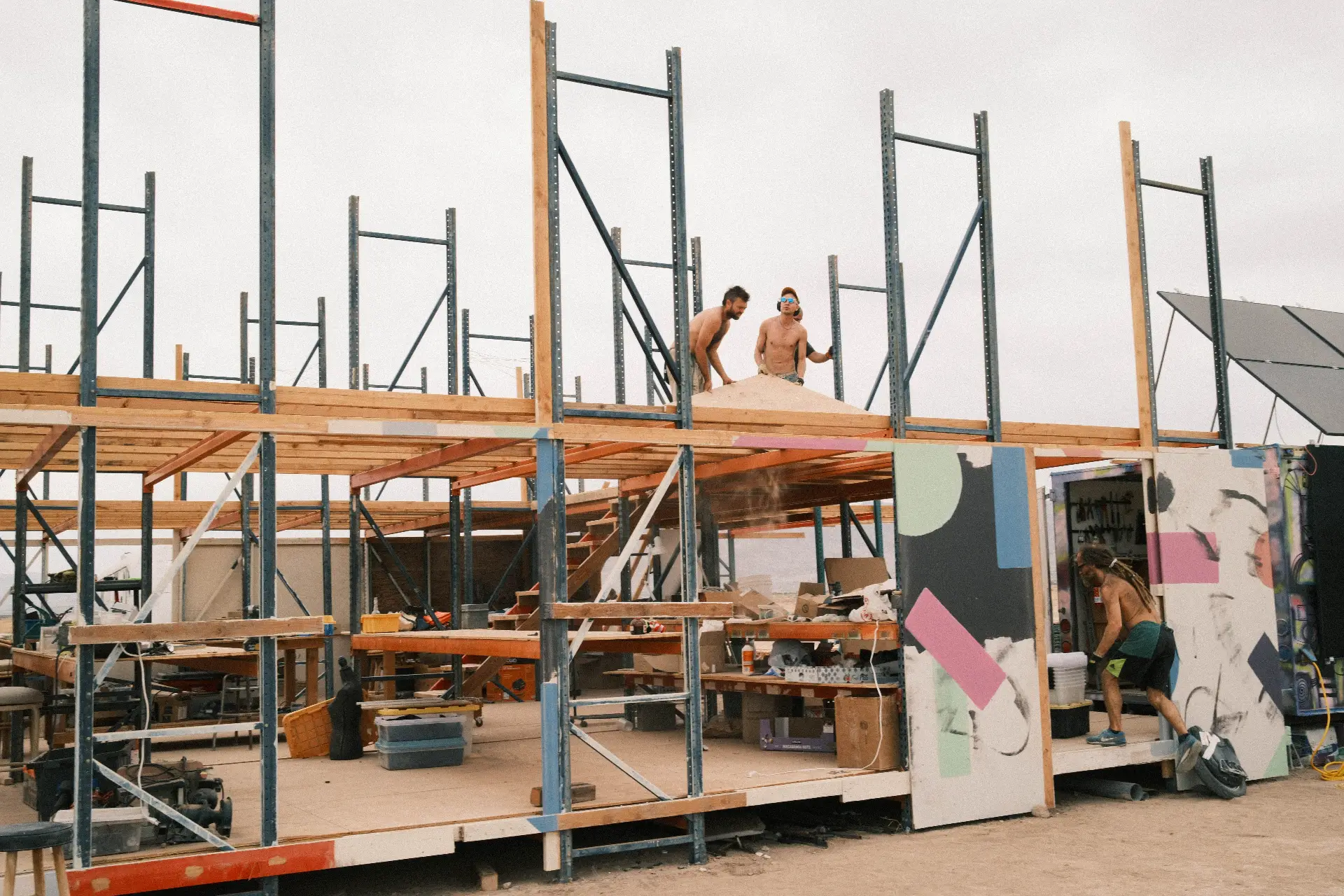
The DOM is centered on a shared fabrication workshop equipped with power, tools, and common work areas for a wide range of projects. Every resident gets a dedicated personal workspace plus full access to the shared shop and its equipment.
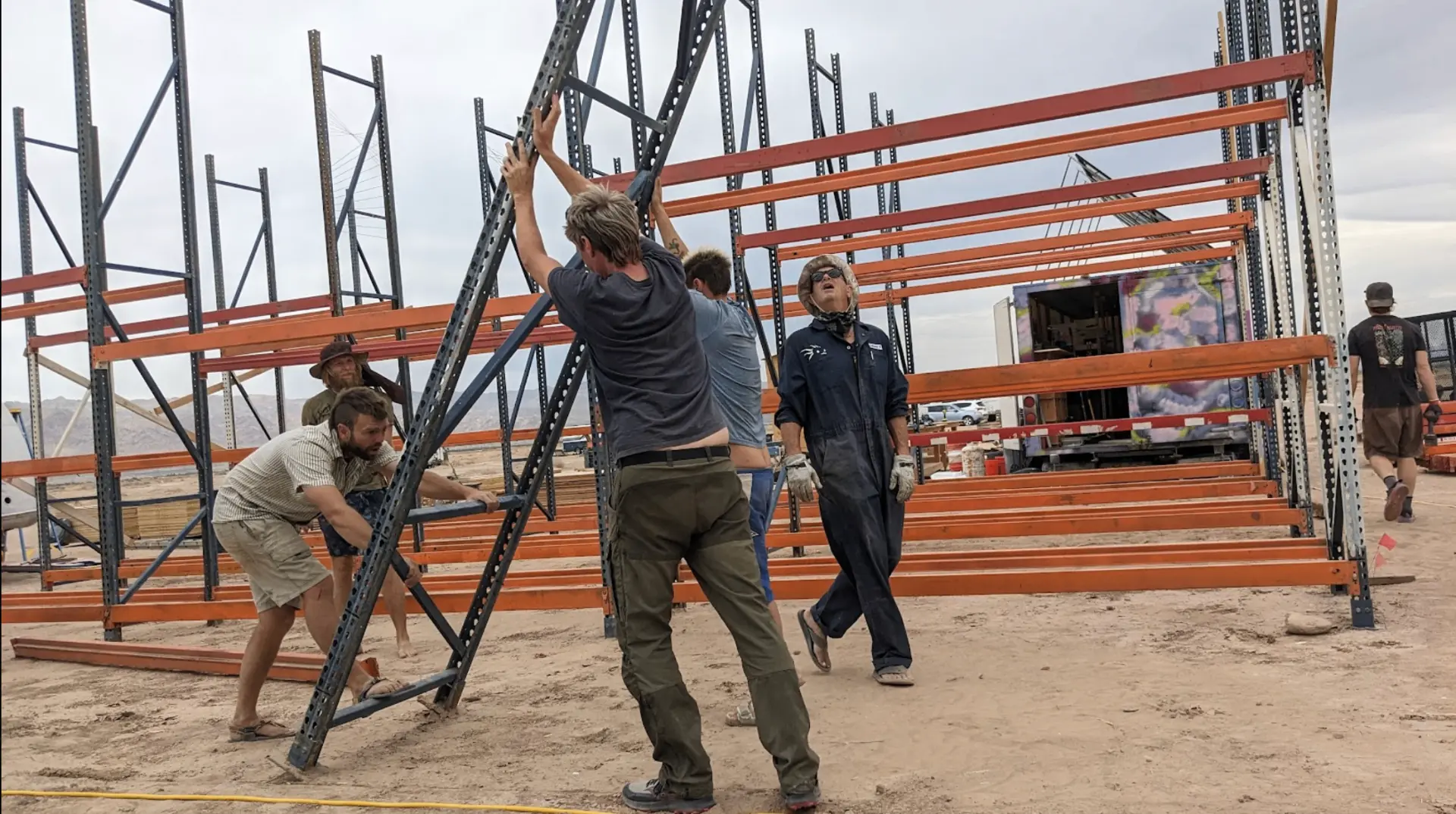
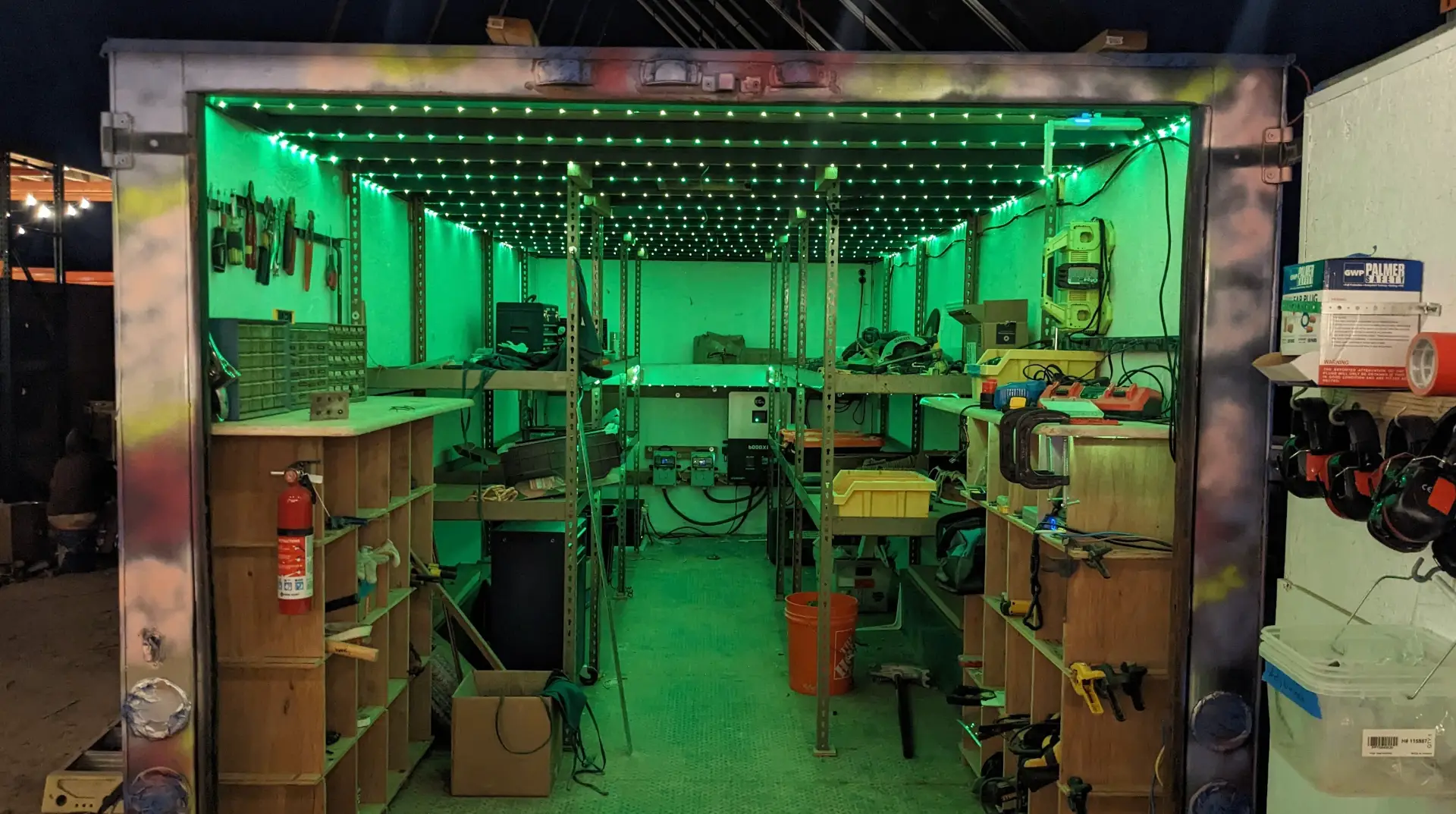
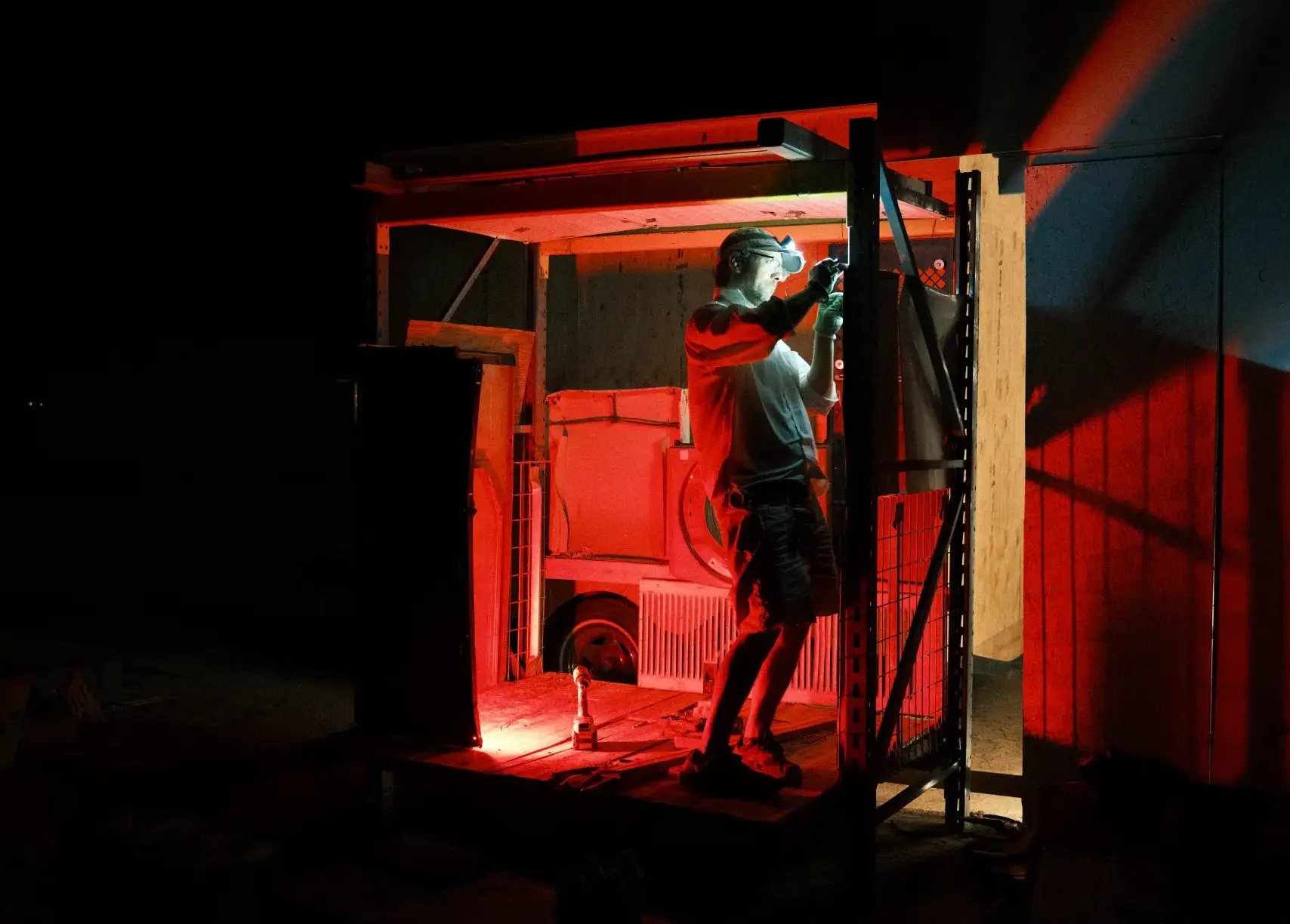
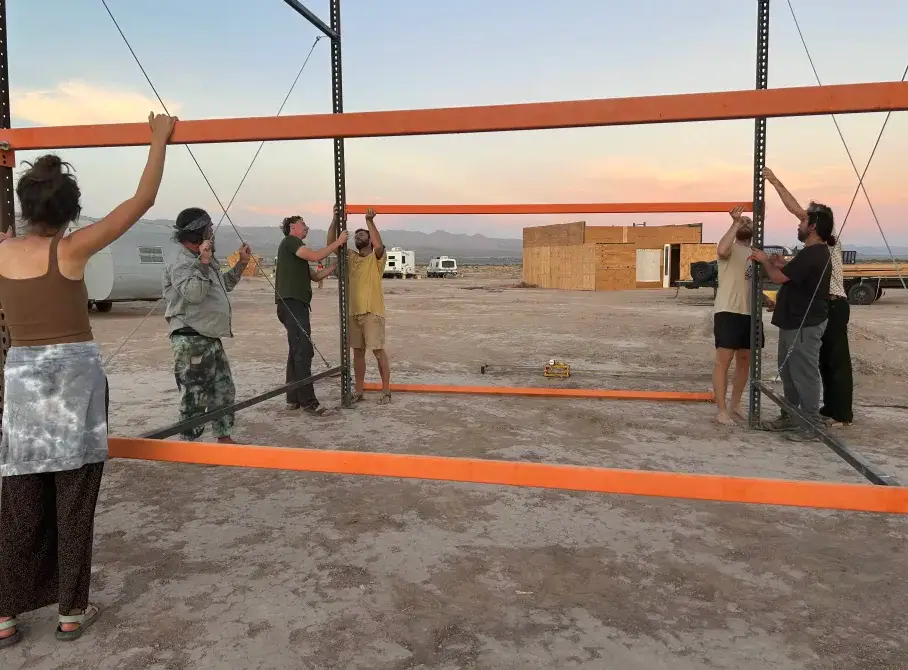
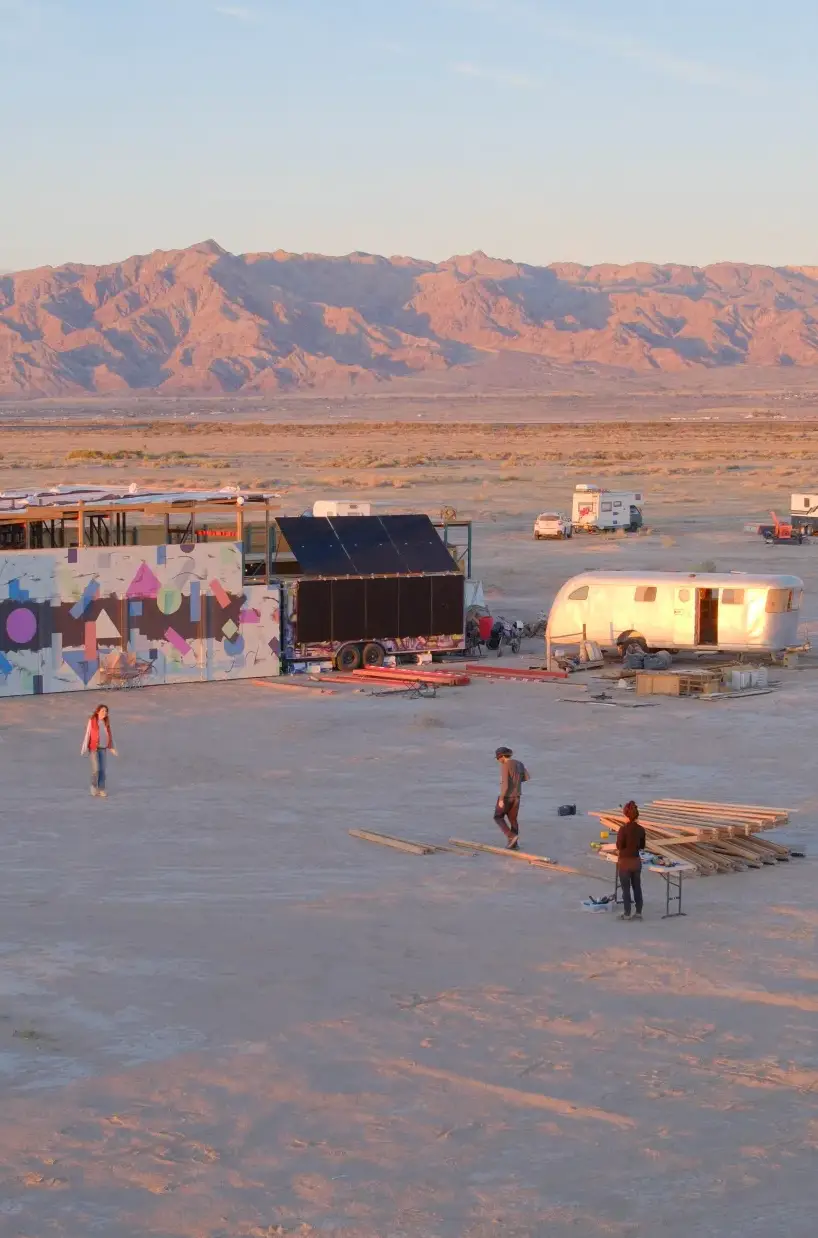
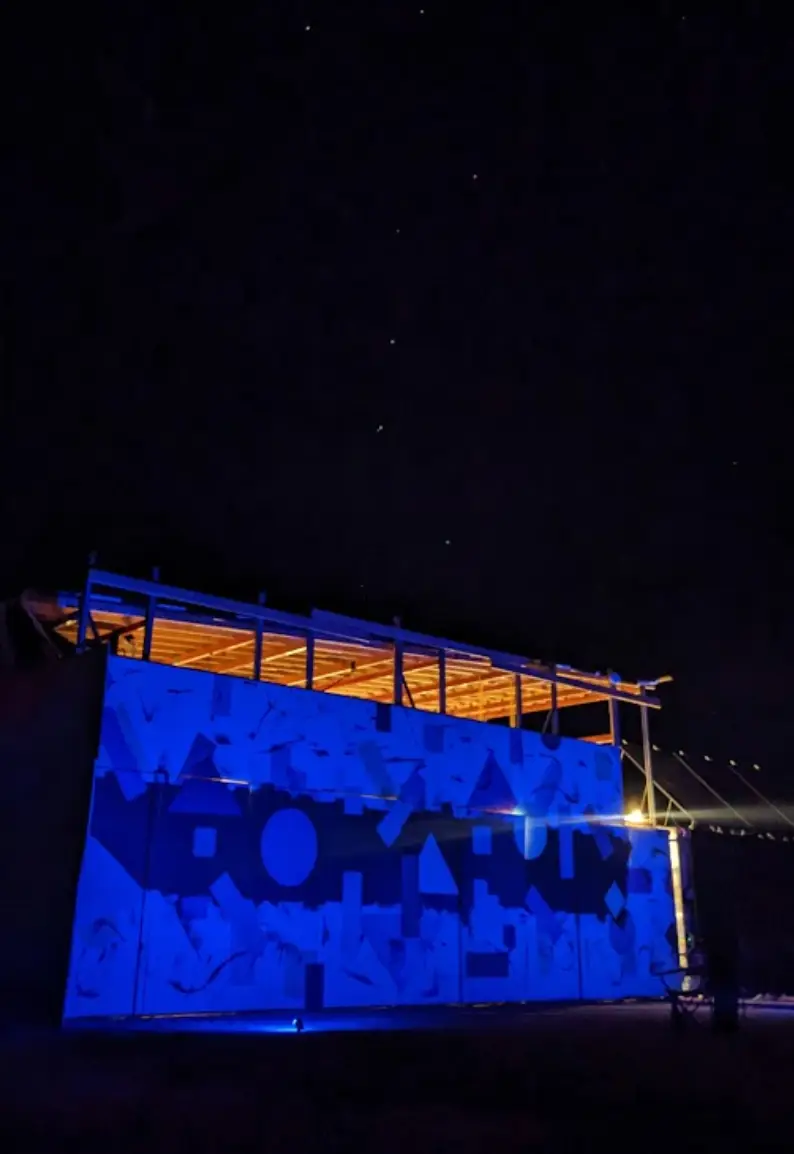
The workshop itself is an evolving prototype. Each year we refine, expand, and improve the infrastructure. Last season we built a dedicated solar-powered tool trailer and significantly expanded our mobile workshop; this year's residents inherit that work — and help shape what comes next. Our structures are modular, portable, and designed to be assembled, disassembled, and transported each season.
The DOM is not a pristine laboratory; it's a field workshop. Expect dust, wind, sun, rain, and the occasional improvisation. Working within those constraints is part of the experience — and part of the design challenge.
Life on Mars.
The DOM supports a range of living styles. Some residents arrive in fully equipped vans or campers and want to cook independently; others opt into a communal meal plan. Rather than expecting everyone to participate the same way, we offer flexible options and let residents decide what works best.
- Shared groceries
- Residents may buy into a communal grocery fund, sharing the cost of staples and common foods — reducing both expense and the need for everyone to shop individually. Those who prefer to buy and prepare all of their own food are equally welcome.
- Communal kitchen & meal rotation
- Participation in the communal kitchen is optional. Residents who opt in share responsibility for cooking for the group on a rotating schedule. Those who don't are still welcome in the communal spaces to hang out and escape the elements.
- Housing
- Bring your own mobile housing whenever possible — a vehicle, camper, van, or RV (tents are discouraged, but not unprecedented). If that isn't possible, it isn't necessarily a barrier: housing may be available through the broader Mars community, often in exchange for helping DPW with setup or teardown. We work with applicants individually to find solutions.
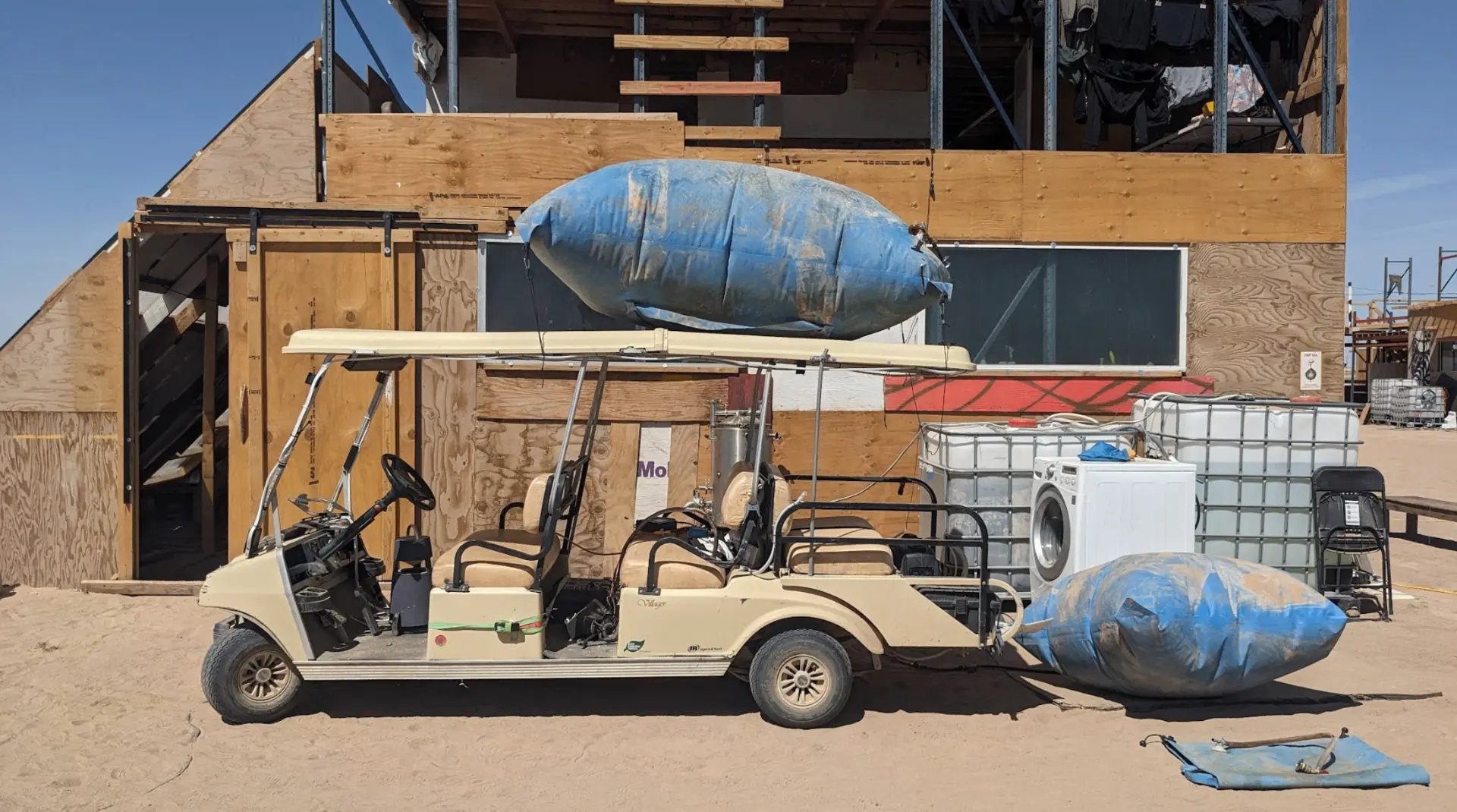
Run by its participants.
Nobody is an employee, and nobody is making a profit. Every dollar contributed goes directly toward the shared costs of running the camp: food, water, internet, power, porta-potties, workshop infrastructure, and the countless practical needs that make three months of building together possible.
$500
Mars College contribution
May be reduced or waived for residents working with the Department of Public Works.
$500 – 1000
DOM contribution
Depending on whether you opt into the communal grocery fund and kitchen.
Self-funded
Personal projects
Limited micro-grants may be available for projects that align with the DOM's mission or contribute to shared infrastructure.
- Stewardship A budget circle manages our pooled funds.
- Surplus If money is left over, a group process decides where it goes.
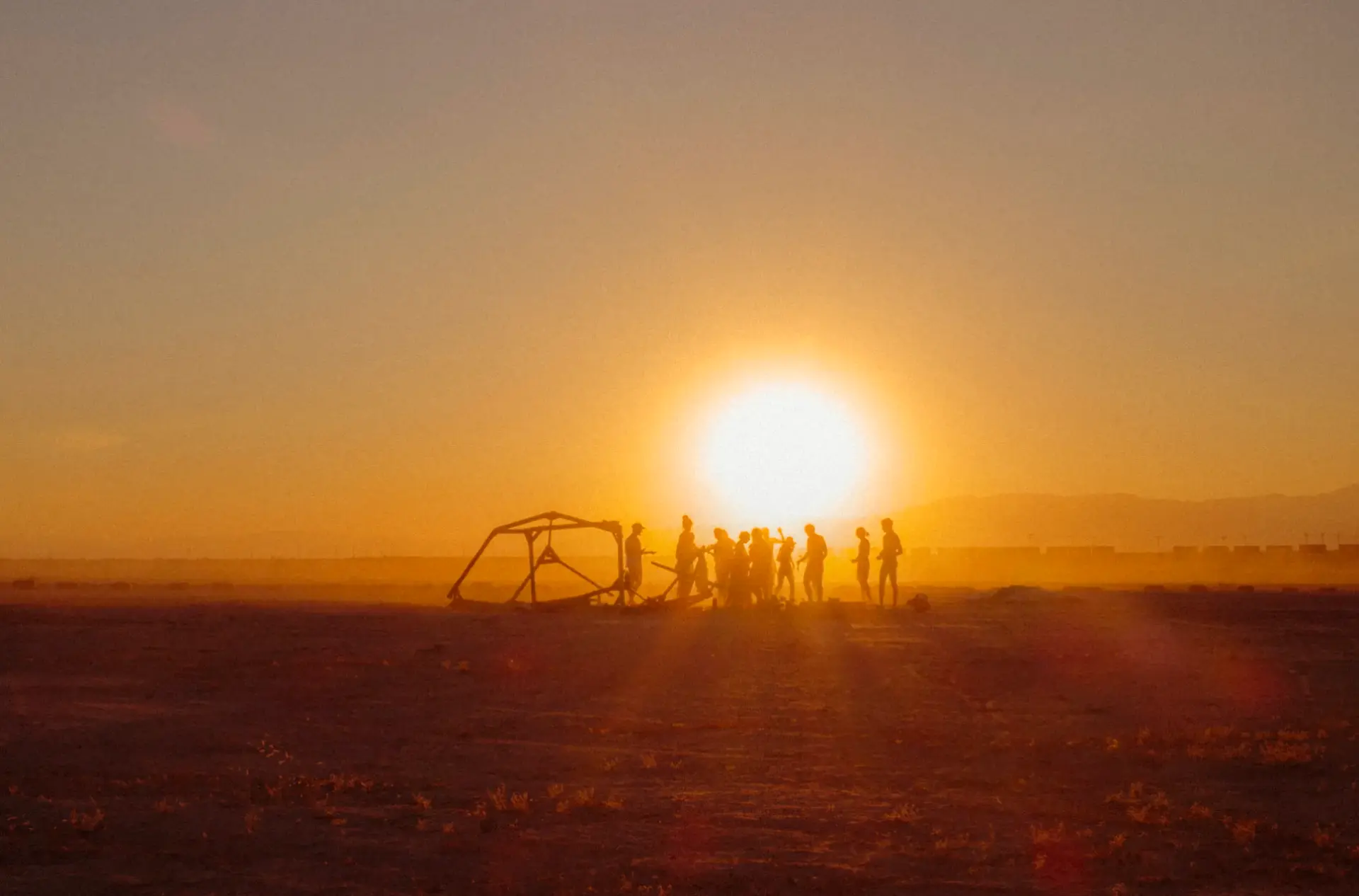
From build to departure.
Mars is full of offerings, happening on any given day across all the camps. This is our camp's schedule.
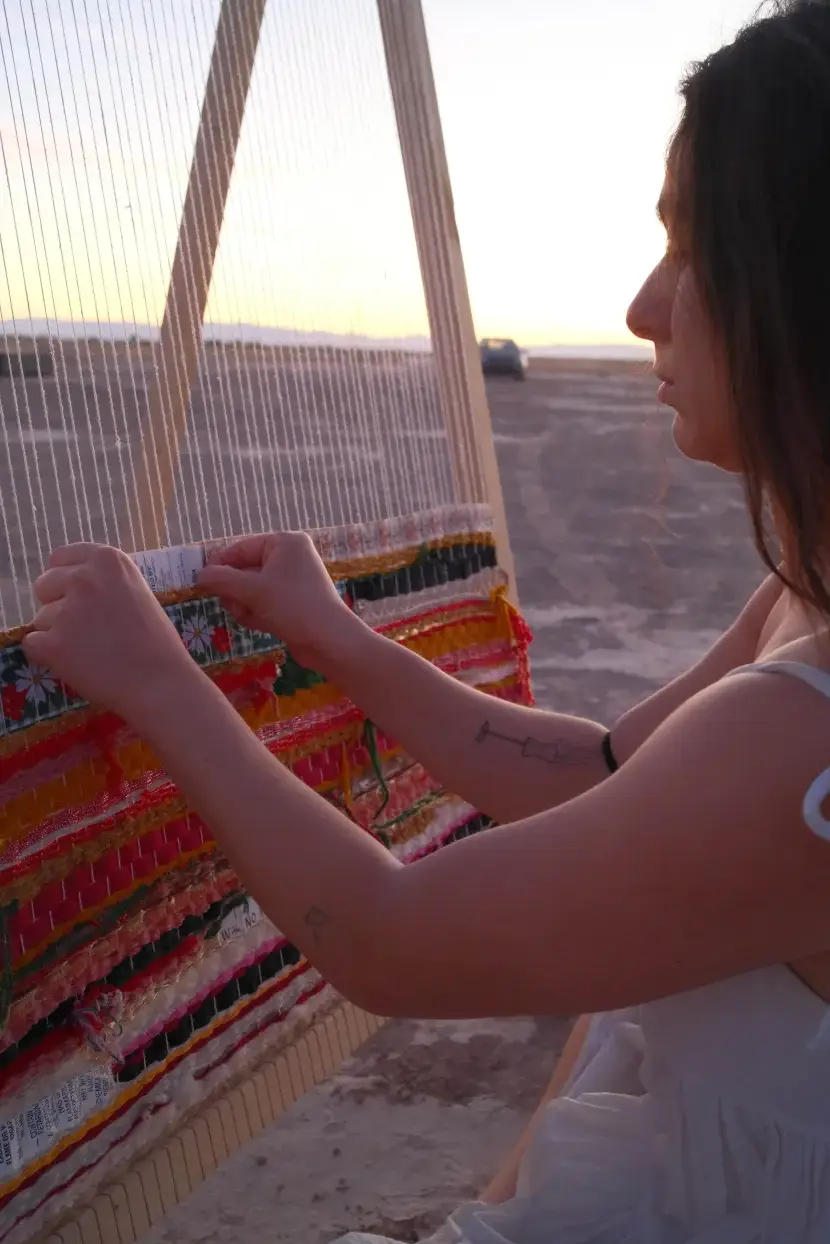
- Dec 28
Build team arrives
We start our build.
- Jan 11
The rest of camp arrives
For those who couldn't come early.
- Jan 5
Build week
We finish the common space, kitchen, and workshop.
- Jan 10
Ideas week
Settle in and start thinking about your project. Nightly lectures where Martians share who they are and what they'll work on.
- Jan 18
The semester begins
From here to midterms: work on your project and join the general collaboration of the DOM.
- Feb 12
Midterms weekend
The Mars campus pauses and comes together to present where each of us is at.
- Mar 8
Final projects begin
A two-week push to finish projects and compile documentation.
- Mar 26 – 28
Mars Electronica
A weekend where Martians present their final projects.
- Mar 30
Unbuild
- Apr 4
Departure
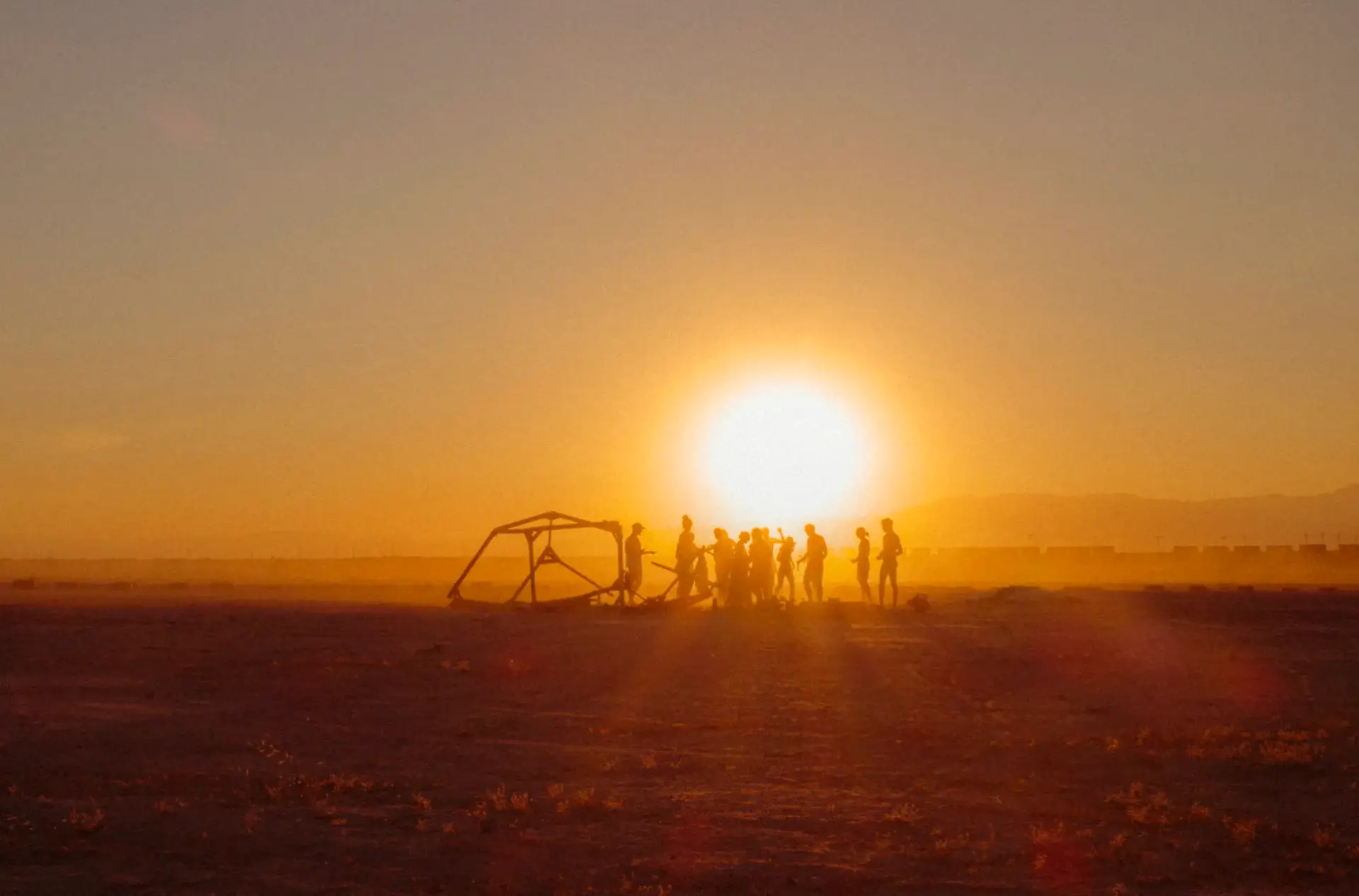
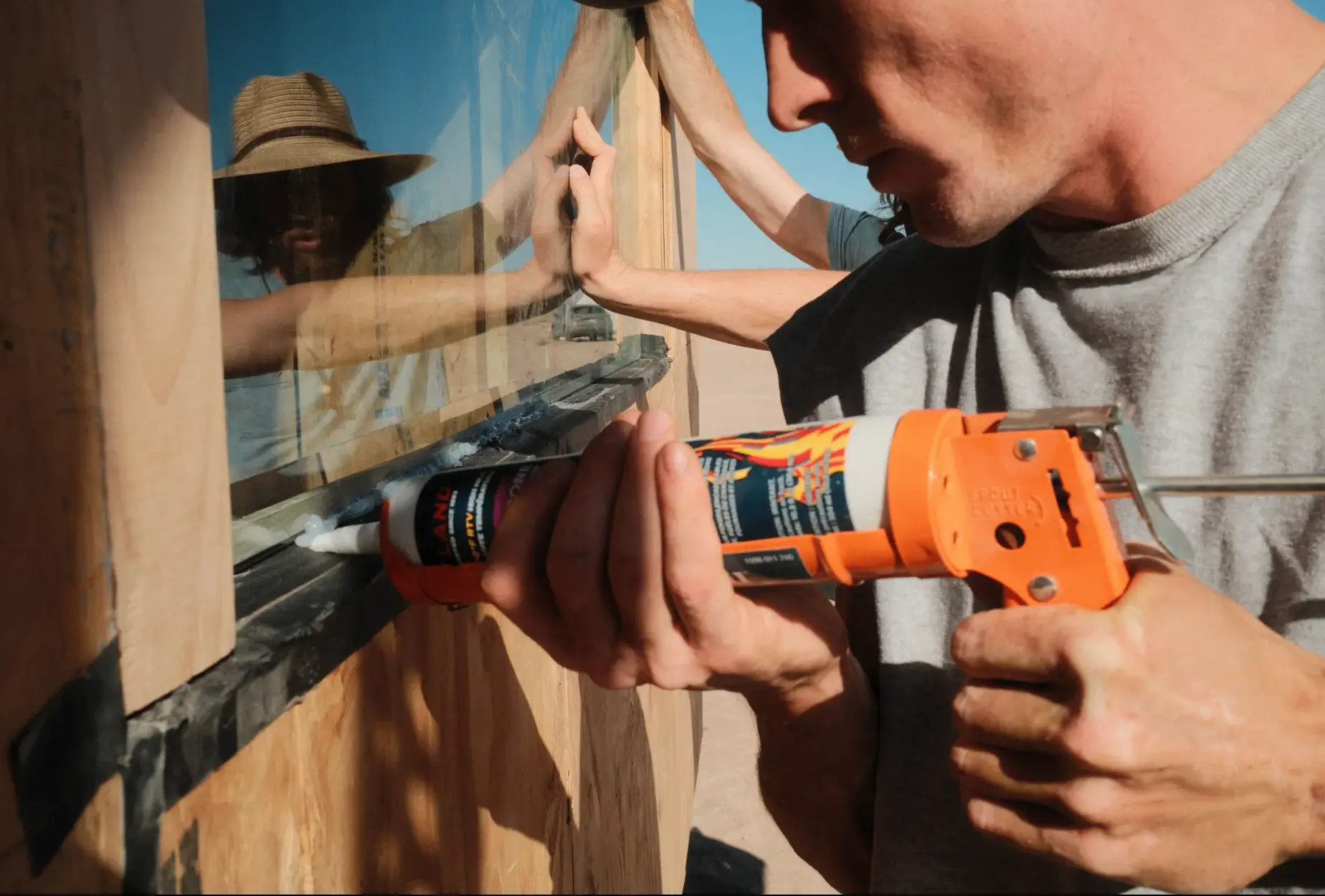
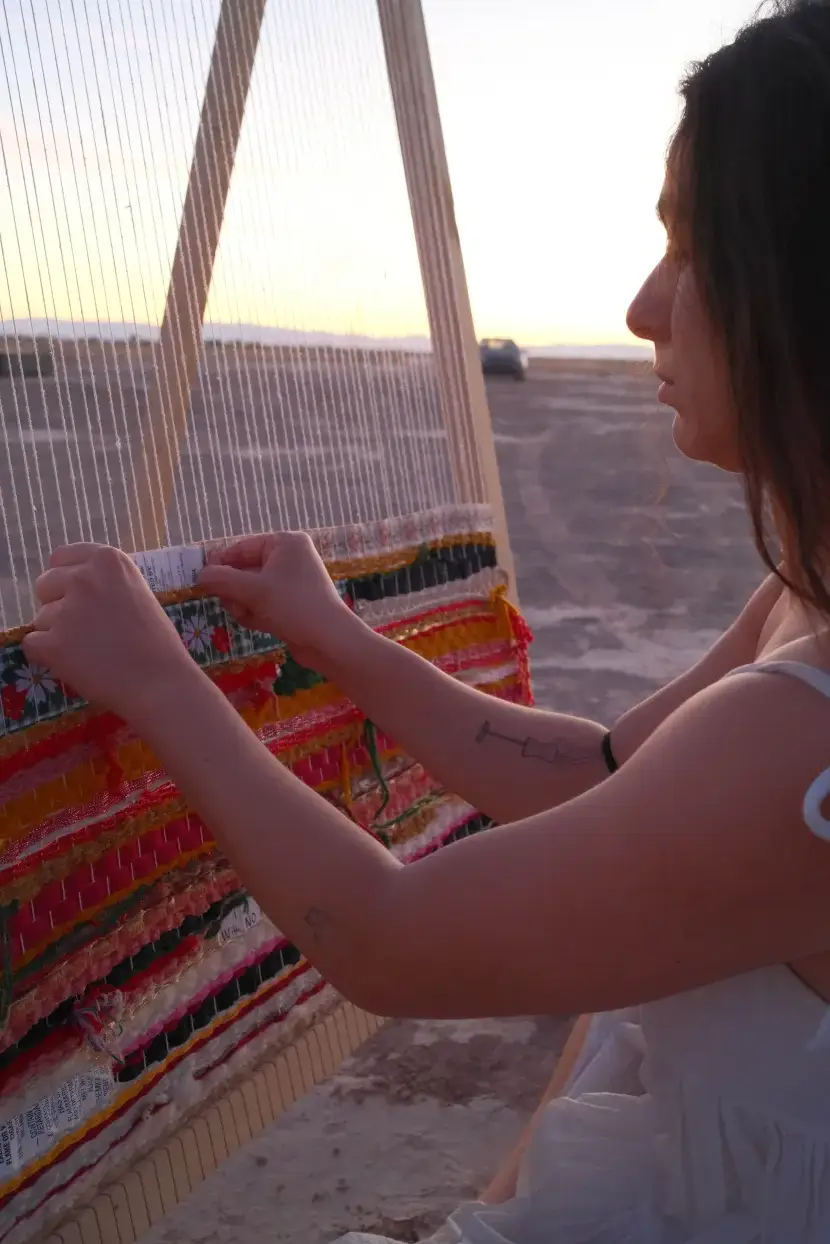
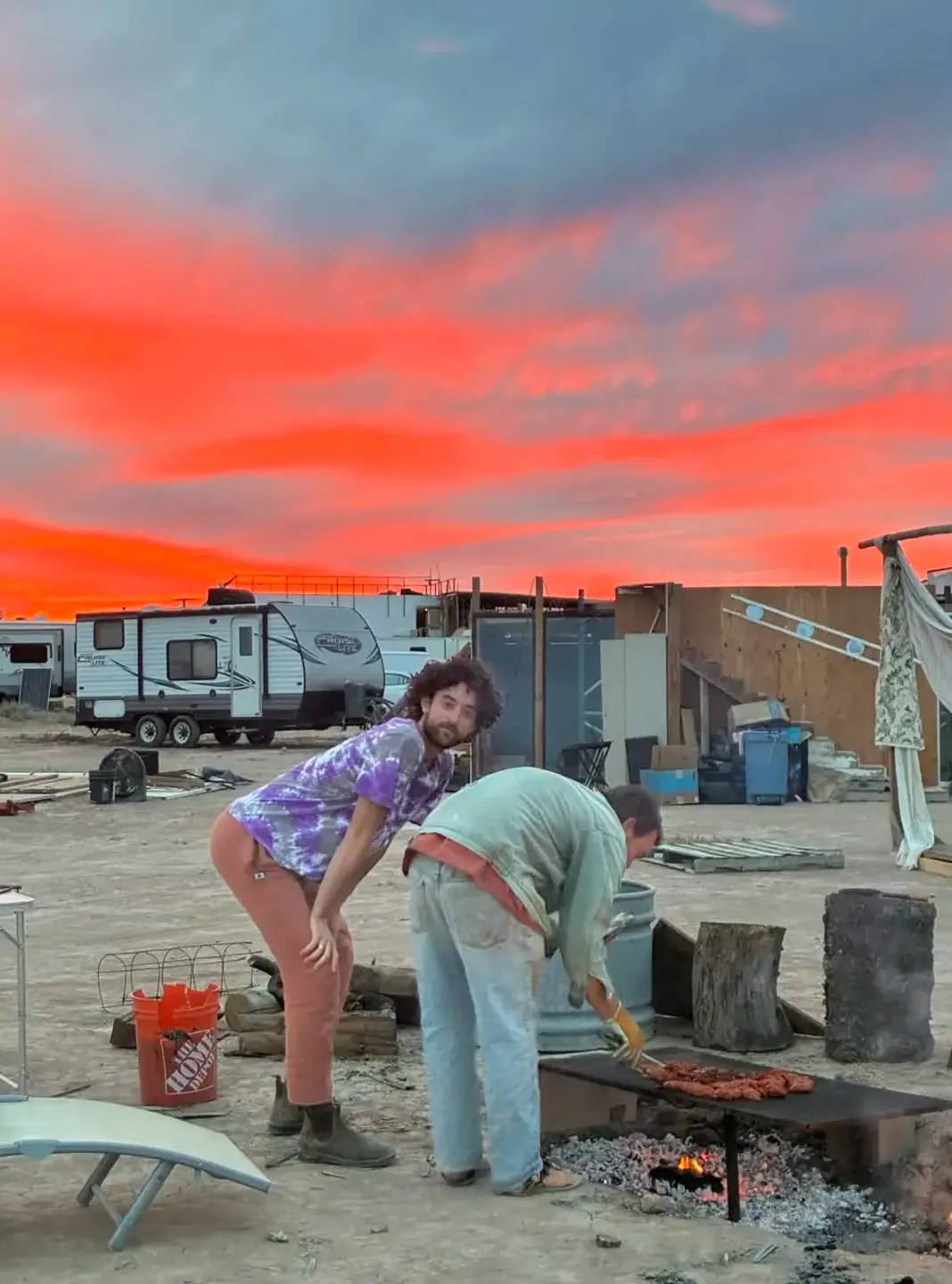
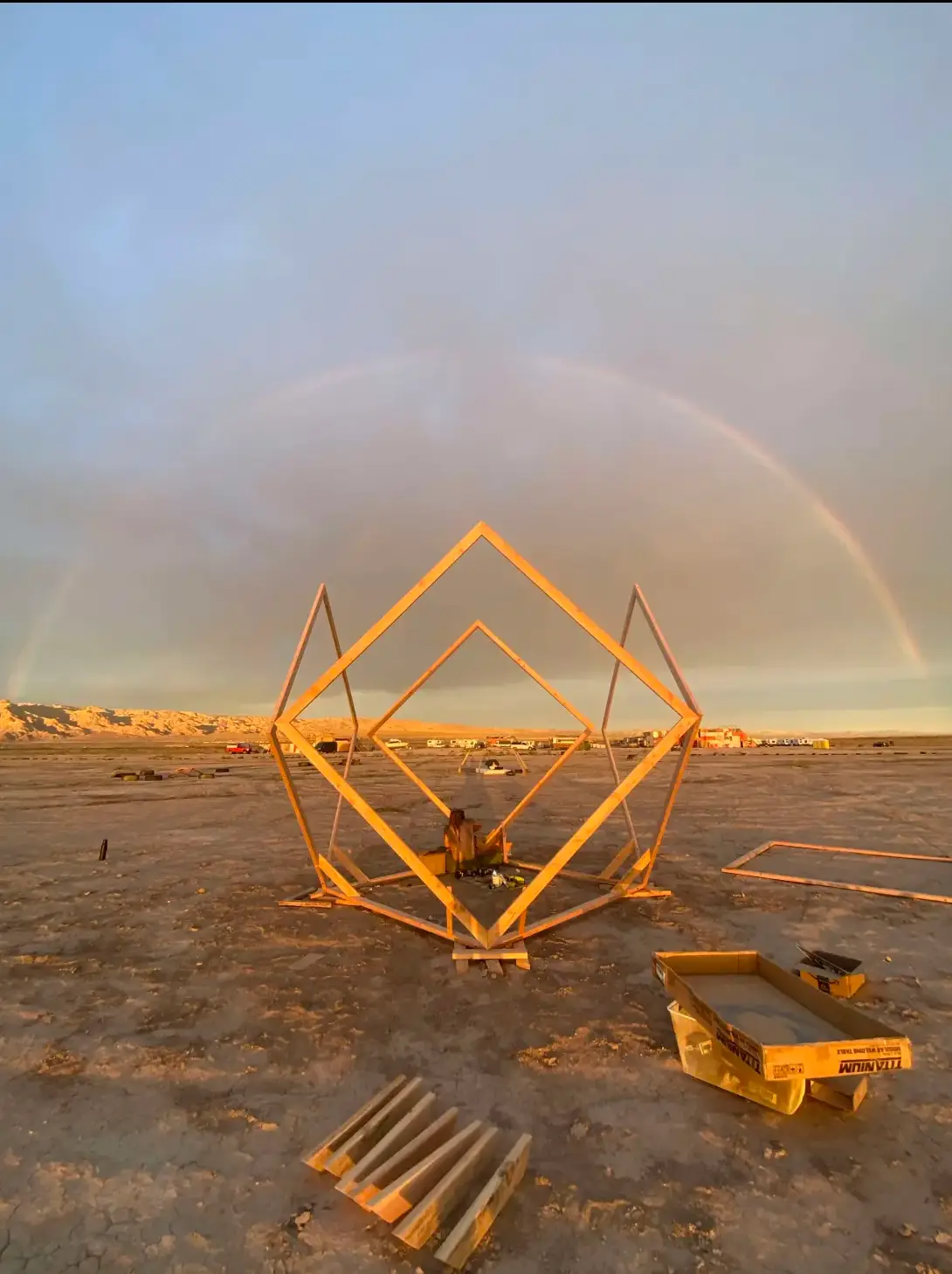
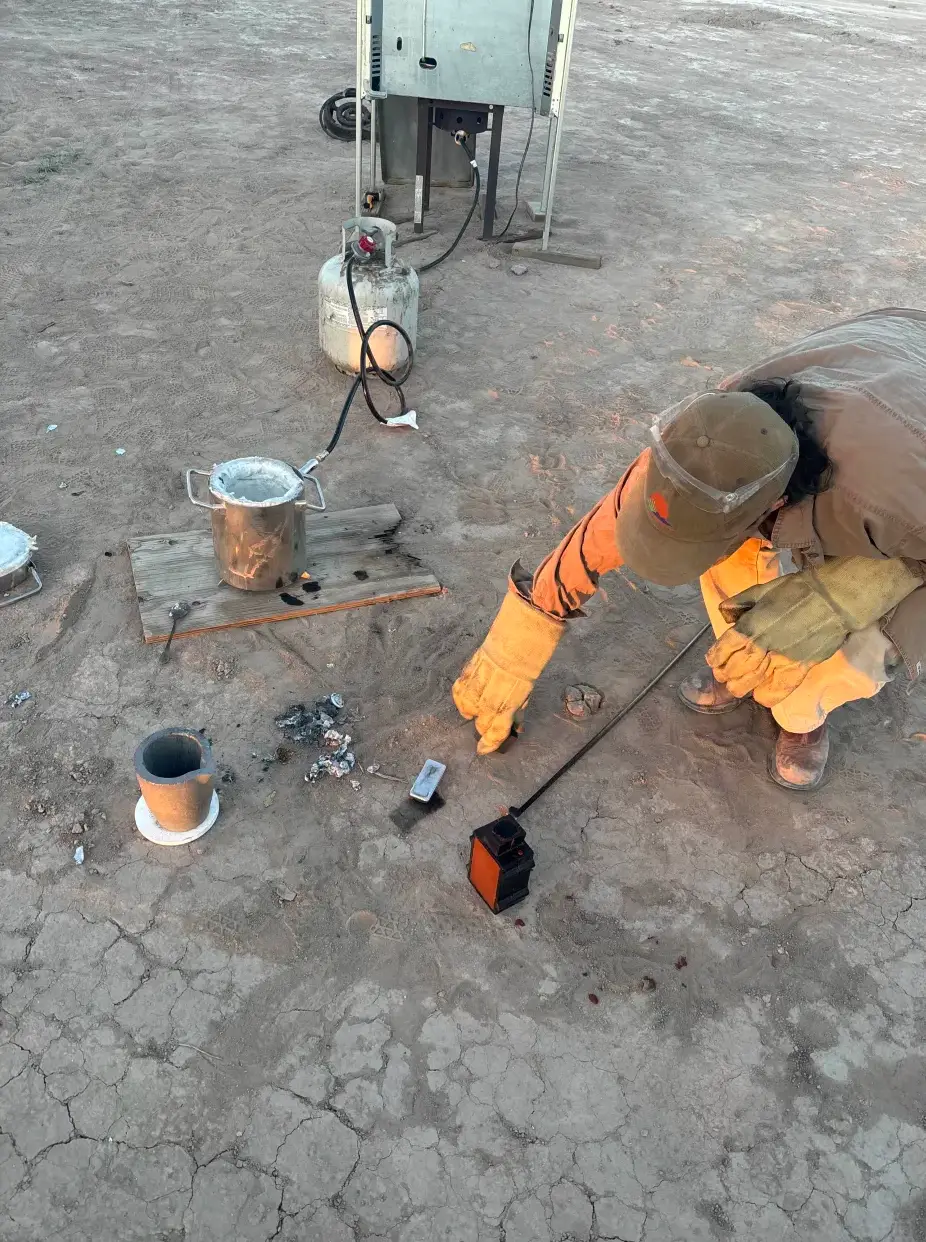
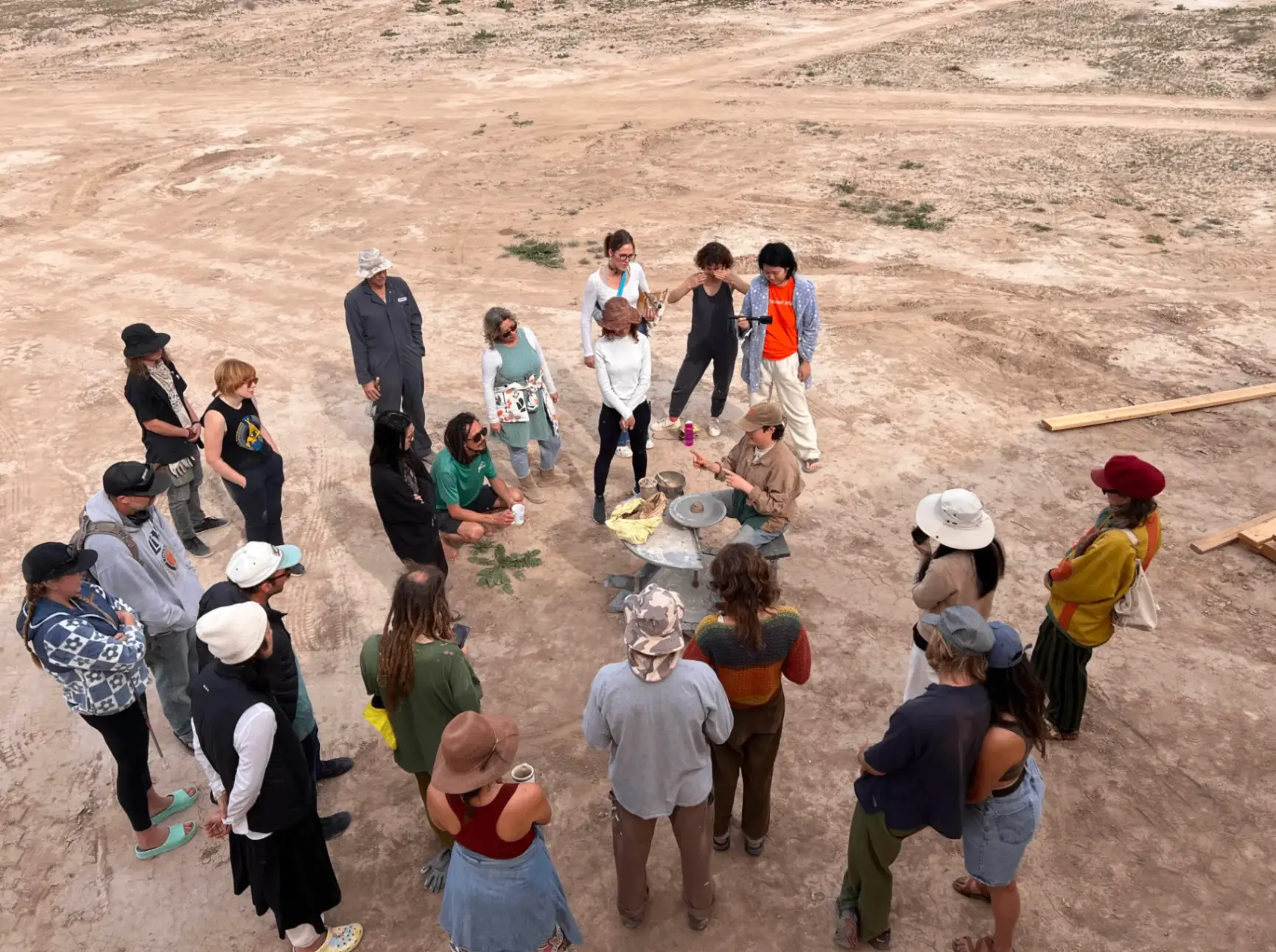
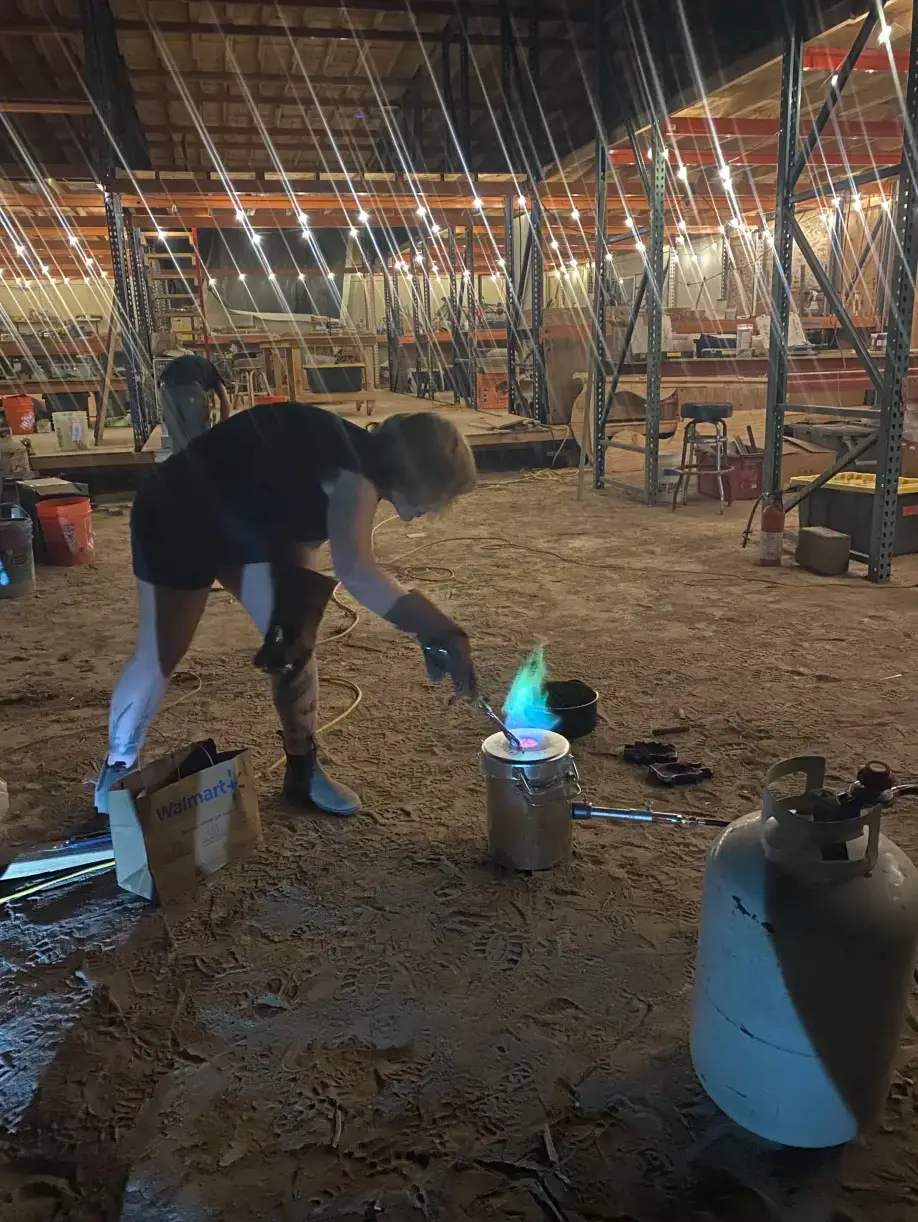
Snapshots from past years.

Once you apply, you'll find a role and start shaping the camp.
Applications open August 1st.
Department of Makers · A program of Mars College